Showing posts with label Wood Stork. Show all posts

Huge numbers in Aguadulce!

As you may know by now, the Aguadulce Salinas (saltponds) are just 30 minutes away of our house in Penonomé (central Panamá).  I took advantage of this proximity and visited the saltponds very early last sunday hoping to find interesting species closer to the road due to the low traffic at that time... and it worked.
As you can see, the diversity and numbers were awesome... and this is only a fraction of the flock!  Can you see how many species were together in that pond?  The Roseate Spoonbill was, by far, the most attractive bird... the pink shade comes from the food it eats: tiny crustaceans rich in carotenoids produced by the algae they eat as well.  The Wood Stork is not exactly a beauty...but is extremely elegant when flying.  I saw no less than 500 storks along the ponds... and amazing number at any season.
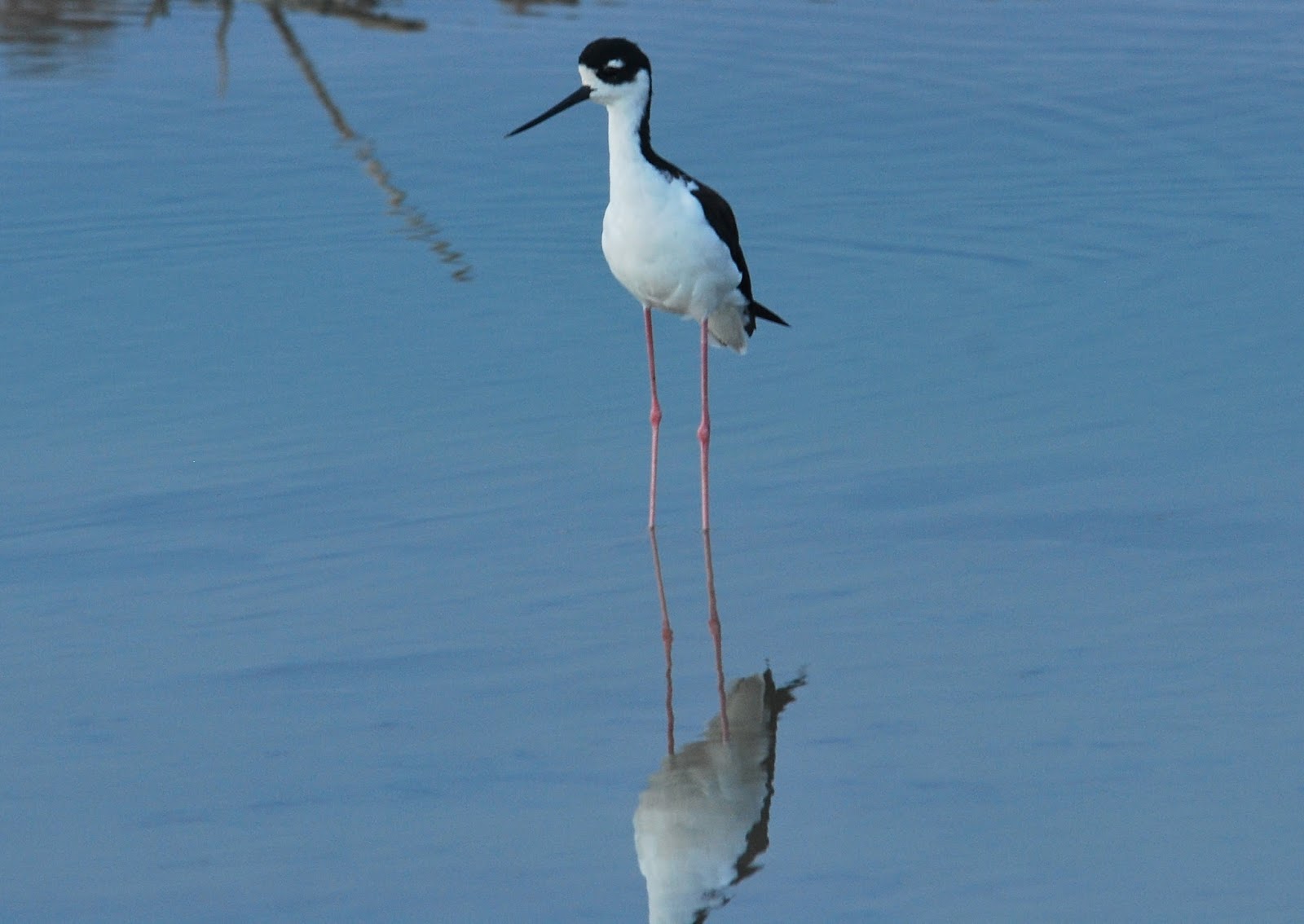
Most egrets and herons were fairly numerous as well, but not as the storks.  The most common was the Great Egret as you can see in the first photo.  Also recorded were Snowy and Cattle Egrets, Great Blue, Little Blue, Tricolored and Green Herons.  The Black-necked Stilts were abundant too... but they like to congregate in little, sparse groups all over the ponds.  They are resident there (the only known breeding site in Panama), but the numbers increase with the arrival of northern migrants.
Despite migration has just started, the ponds were covered in migrant shorebirds and plovers.  Thousands of peeps (including Western, Semipalmated and Least Sandpipers), Semipalmated Plovers and both Lesser and Greater Yellowlegs were feeding at the ponds.  This Greater Yellowlegs shows the typical bicolored (paler to the base), slightly upturned bill, separating it of the Lesser Yellowlegs.
However, it was another migrant that surprised me.  I found a resting group of Black Skimmers in a sand bar in the middle of a pond... not an unusual sight for the site, nor for the time of the year.  Then, more and more flocks started to arrive directly from the sea... I counted 238 birds (at least)... all seemed to belong to the race breeding in North America.
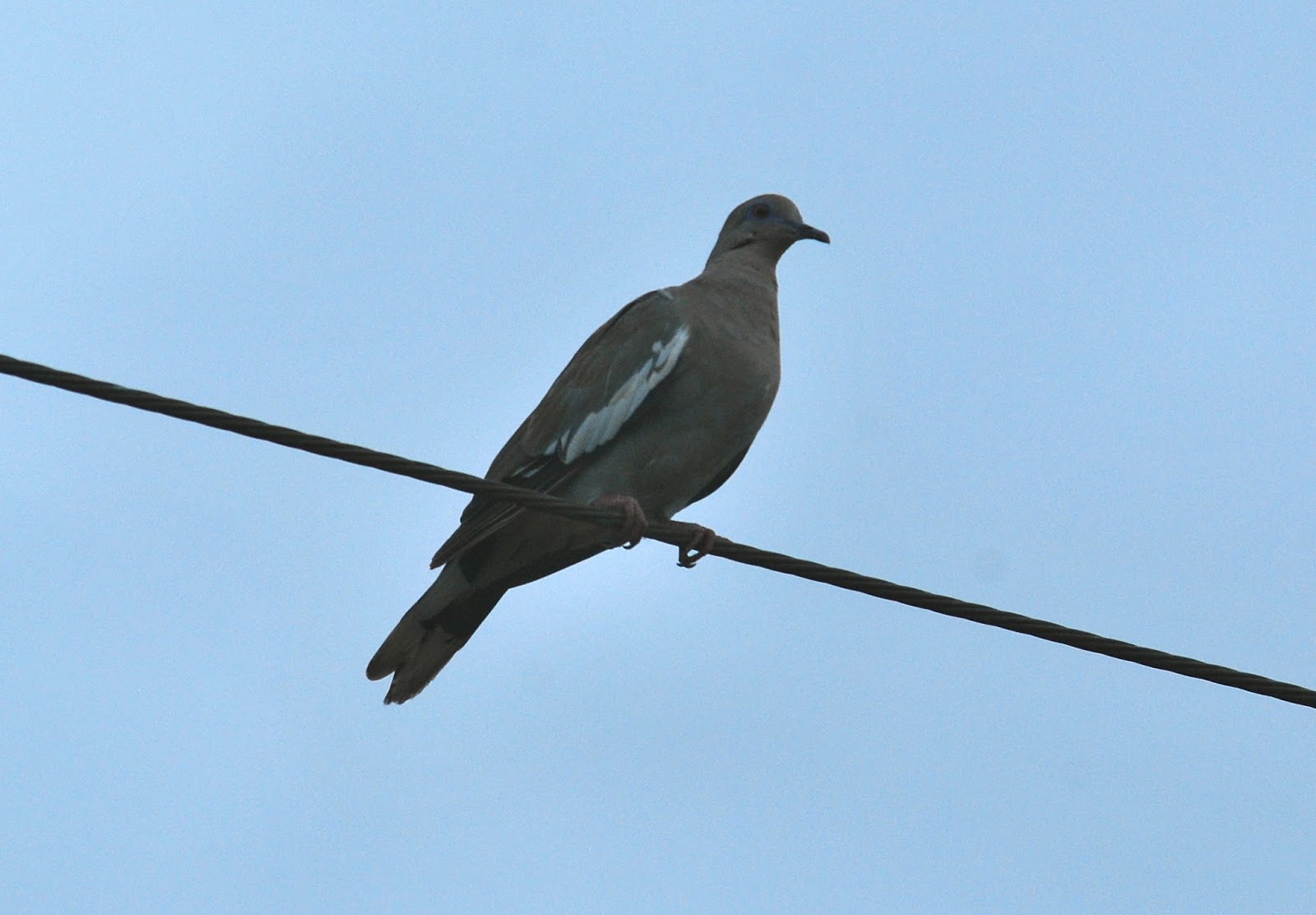
Some other species were simply more conspicuous than in other visits... that was the case of the White-winged Doves.  Restricted to the drier areas along the Parita Peninsula of central Panamá, this species is readily found along the street running parallel to the beach heading to the fishing town of El Salado.  I found many individuals, some in groups of three to four birds, some vocalizing.
The last bird I found in the ponds was also the less expected.  A basic-plumaged Red-necked Phalarope was swimming and feeding, bobbing its head nervously and allowing some shots.  This species is mainly pelagic... that is, usually found away of the coast in the sea; but Aguadulce is a quite regular site to see this migrant.  Well, what a great day at the saltponds!
P.D.:  I count eight (8) different species in the first photo.  How many do you?

Still looking for THE heron

It seems that the only thing we did last month was to look for the vagrant Whistling Heron reported elsewhere by Kevin Easley et al.  And last weekend was not the exception!  However, this time accompanied by Rafael Luck, Osvaldo Quintero and his son-in-law Joaquín, we stopped first at some marshes just east of Panamá City, the former Tocumen marshes.  Like other days, we found the typical avifauna of these habitats, but dip on the heron again.  Well, nothing to sorry about because we knew it was very unlikely to find the bird so far away of the original spot, but we did have a nice day photographing all sort of birds species, including HUGE numbers of Wood Storks, Neotropic Cormorants all over the place (see the photo above), and many Cocoi Herons, like the one pictured below.
These marshes are also very good for raptors, and we saw or heard Roadside, Common Black and Gay-lined Hawks, plus Pearl and White-tailed Kites too.  This one was perched close to the road allowing some photos.
The site is the only reliable one for Yellow-headed Vulture close to the city, and we found at least three individuals resting close to the road.
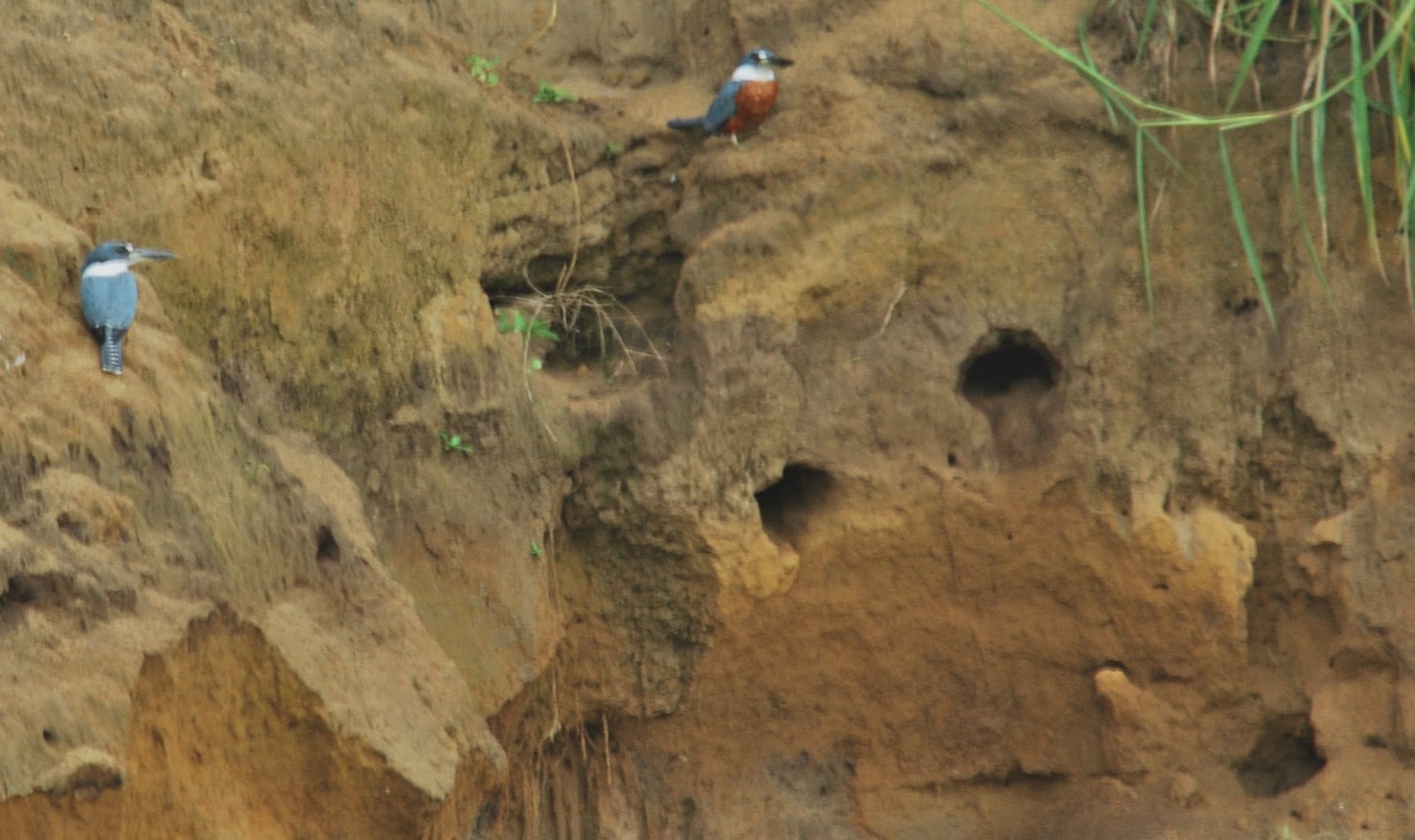
We found no less than six Ringed Kingfishers in one stretch of a creek... soon we realized that they were nesting in the sandy banks.  This image remind me the photos of bee-eaters at their colonies... after all they are related.
We went to the spot near Chepo, but the day was hot and we only found more birders trying, unsuccessfully, to relocate the heron... so we called it a day.  The next day, I joined Karl and Rosabel Kaufmann and, very early, went to the spot near Chepo.  Though we had a good day, we were not able to relocate the Whistling Heron.  We checked miles of dirty roads, finding more Wood Storks and a beautiful Capped Heron sharing the pond with one of the storks.
Again, we saw many raptors, like Roadside and Great Black Hawk, White-tailed Kites, and several pairs of American Kestrels.  Again, notice the absence of spots in the underparts... probably the same individual we photographed some weeks ago in the same spot.
New for our list of the site was this Bat Falcon perched in some wires.  It allowed us to approach closely, a very cooperative bird.
Well, I don't know if the Whistling Heron will be found again... but that area surely will reveal many surprises in the future!

The heronry close to Chepo

Chepo is an agricultural town located 30 miles to the east of Panamá City, and is the capital of the district bearing the same name.  It is surrounded by pastures, rice fields and marshes, making this site attractive to a great variety birds.  For many years now, an heronry exists just outside of town, mostly with nesting pairs of Cattle Egrets, but also some other species.  We usually don't stop at this spot; however, today was different.  Accompanied by Rafael Luck, Venicio "Beny" Wilson and Itzel Fong, and at the end of our birding day (more on it in another post), we notice the intense activity at the heronry when leaving Chepo.
It doesn't matter how many Cattle Egrets you have seen... you MUST stop if you see something like this!  Those bright colors of the bare parts were simply beautiful!
Well, only a minority exhibited those bright bare parts, but all the birds had the orangish tones typical of breeding birds (completely white outside breeding season).  At least one hundred nests were visible, many with chicks begging for food.  Look at those chicks... any doubt these beast were once dinosaurs?
The second most common species was the Anhinga.  We saw at least ten nest, each with a male or female on it, some with chicks.
The males also exhibited bright bare parts around the eyes... simply beautiful!
We also saw three nests of Great Egrets, but there were probably more species nesting in the site, since the heronry extend beyond our field of view, but we stayed only for a while.  We did another stop at a nearby pond after noticing an Amazon Kingfisher by the road.
The kingfisher was only the appetizer... the pond was full of life, with Green Herons, Snowy and Great Egrets, many Black-billed Whistling-Ducks and Southern Lapwings, Wattled Jacana, Black-necked Stilt and a flock of resting Wood Storks.
Common species?  Right... but interesting anyway!